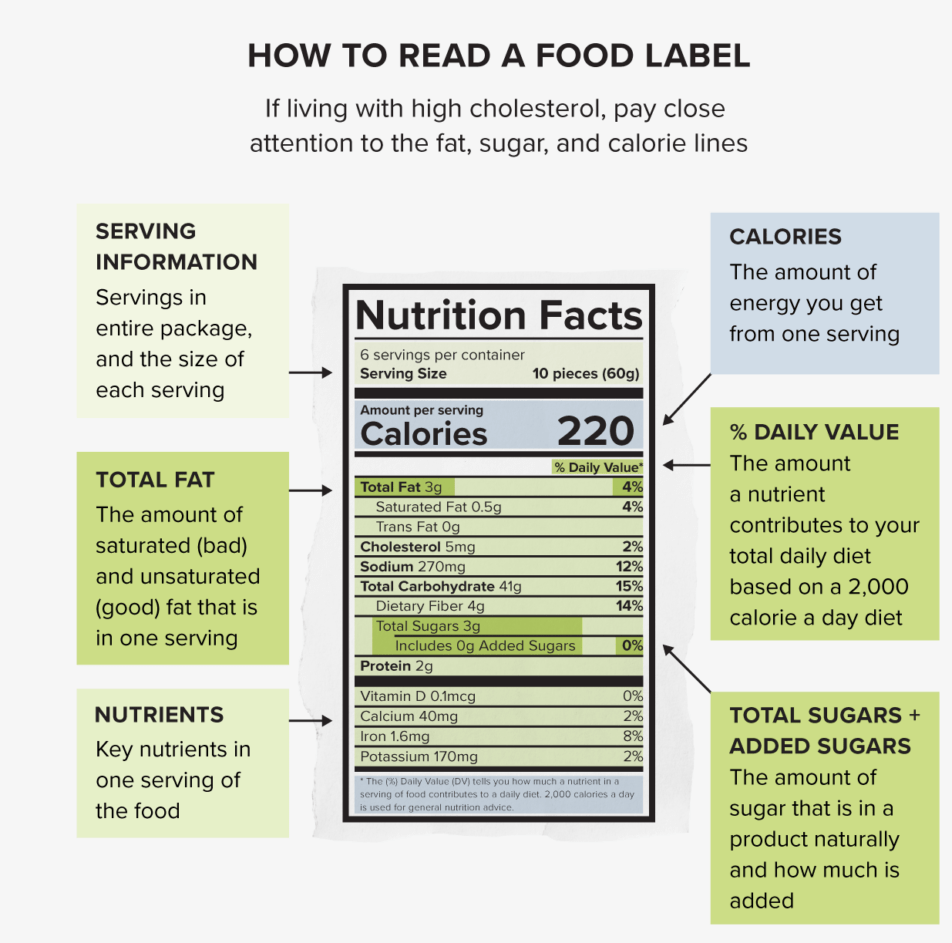
Understanding nutrition labels can help you make smarter food choices and build healthier eating habits. Here are some simple things to check:
- Check the Serving Size
Look at the serving size first. The calories and nutrients listed usually apply to one serving, not necessarily the whole package. - Look at Calories
Calories tell you how much energy you get from a serving. Compare similar products and consider how many servings you actually eat. - Check Protein and Fiber
Protein supports muscle growth and repair, while fiber helps digestion and can keep you feeling full longer. Foods with higher amounts of these nutrients can be useful additions to a balanced diet. - Watch Added Sugar
Check the added sugar amount. Regularly consuming large amounts of added sugar can make it harder to maintain a healthy diet. - Pay Attention to Sodium
High sodium intake can be a concern for many people. Compare products and choose lower-sodium options when appropriate. - Check the Ingredients
Ingredients are generally listed from the largest amount to the smallest. Look for whole-food ingredients and limit products with excessive added sugars, sodium, or highly processed ingredients. - Compare Similar Products
Don’t judge a food only by calories. Compare serving size, protein, fiber, sugar, sodium, and ingredients between similar products.
Remember: A nutrition label is a tool, not a judgment. Focus on your overall eating pattern and choose foods that fit your nutritional needs and goals.