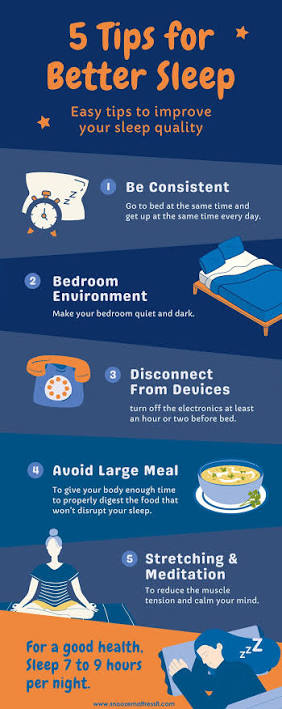
A good night’s sleep starts long before your head touches the pillow. Creating a relaxing evening routine helps your body and mind prepare for deep, restorative sleep. Better sleep improves energy, mood, focus, and overall health.
- Stick to a Consistent Sleep Schedule
Try to go to bed and wake up at the same time every day, even on weekends. A regular schedule helps regulate your body’s internal clock. - Limit Screen Time
Avoid using smartphones, tablets, or computers at least 30–60 minutes before bed. Blue light from screens can reduce melatonin production, making it harder to fall asleep. - Eat a Light Dinner
Avoid heavy, spicy, or greasy meals late in the evening. If you’re hungry before bed, choose a light snack such as yogurt, a banana, or a handful of nuts. - Reduce Caffeine and Alcohol
Avoid coffee, energy drinks, and alcohol in the evening. These can interfere with your sleep quality and make it difficult to stay asleep. - Create a Relaxing Environment
Keep your bedroom cool, quiet, and dark. Comfortable bedding and minimal noise help promote restful sleep. - Practice Relaxation Techniques
Spend 10–15 minutes meditating, doing deep breathing exercises, or reading a book to calm your mind before bed. - Avoid Intense Exercise Late at Night
Regular exercise supports better sleep, but vigorous workouts close to bedtime may keep you awake. Aim to finish intense exercise at least a few hours before sleeping. - Write Down Your Thoughts
If your mind is busy, jot down tomorrow’s tasks or your thoughts in a journal. This can reduce stress and help you relax.
Conclusion
A simple evening routine can make a big difference in your sleep quality and overall well-being. By following healthy habits every night, you’ll wake up feeling refreshed, energized, and ready for the day ahead.