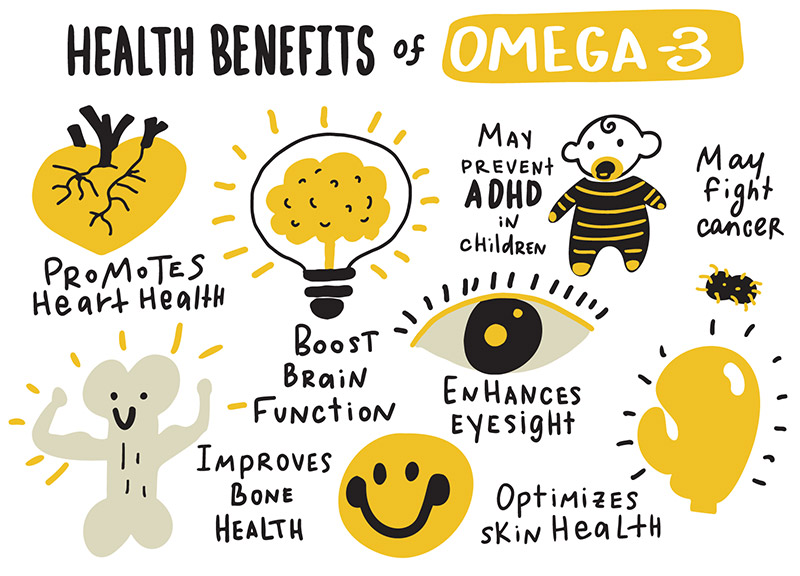
Omega-3 fatty acids are essential nutrients that play a vital role in maintaining overall health. Since the body cannot produce enough omega-3s on its own, they must come from foods or supplements. Rich sources include fatty fish such as salmon, mackerel, sardines, flaxseeds, chia seeds, walnuts, and algae-based products.
What Are Omega-3 Fatty Acids?
There are three main types of omega-3 fatty acids:
EPA (Eicosapentaenoic Acid): Supports heart health and helps reduce inflammation.
DHA (Docosahexaenoic Acid): Essential for brain function, vision, and nervous system health.
ALA (Alpha-Linolenic Acid): Found in plant-based foods and can be partially converted into EPA and DHA.
Top Health Benefits of Omega-3
- Supports Heart Health
Omega-3s help maintain healthy blood pressure, reduce triglycerides, and support overall cardiovascular health. - Improves Brain Function
DHA is a major structural component of the brain and may support memory, concentration, and cognitive performance. - Promotes Eye Health
Omega-3 fatty acids, especially DHA, are important for maintaining healthy vision and supporting retinal function. - Reduces Inflammation
Omega-3s may help reduce chronic inflammation, which is associated with conditions such as arthritis and heart disease. - Supports Joint Health
People with joint discomfort may benefit from omega-3s due to their anti-inflammatory properties, which can help improve mobility. - Enhances Mood
Research suggests that omega-3 fatty acids may help support emotional well-being and may be beneficial alongside professional treatment for some mood disorders. - Supports Healthy Pregnancy
Adequate omega-3 intake during pregnancy contributes to healthy brain and eye development in babies. - Aids Muscle Recovery
Athletes and active individuals may benefit from omega-3s, as they can help reduce exercise-related inflammation and support recovery.
Best Food Sources of Omega-3
Salmon
Mackerel
Sardines
Herring
Tuna
Chia seeds
Flaxseeds
Walnuts
Hemp seeds
Algae oil
Should You Take an Omega-3 Supplement?
If you rarely eat fatty fish, an omega-3 supplement may help you meet your needs. Fish oil and algae-based omega-3 supplements are popular options. Consult a healthcare professional before starting supplements, especially if you take blood-thinning medication or have a medical condition.
Tips to Increase Omega-3 Intake
Eat fatty fish at least twice a week.
Add chia or flaxseeds to smoothies or oatmeal.
Snack on walnuts.
Choose omega-3-enriched foods when available.
Consider a high-quality omega-3 supplement if dietary intake is insufficient.
Conclusion
Omega-3 fatty acids are essential for heart, brain, eye, and joint health. Including omega-3-rich foods in your daily diet can support overall wellness, improve recovery, and help maintain long-term health. A balanced diet combined with healthy lifestyle habits is the best approach to getting the full benefits of omega-3.